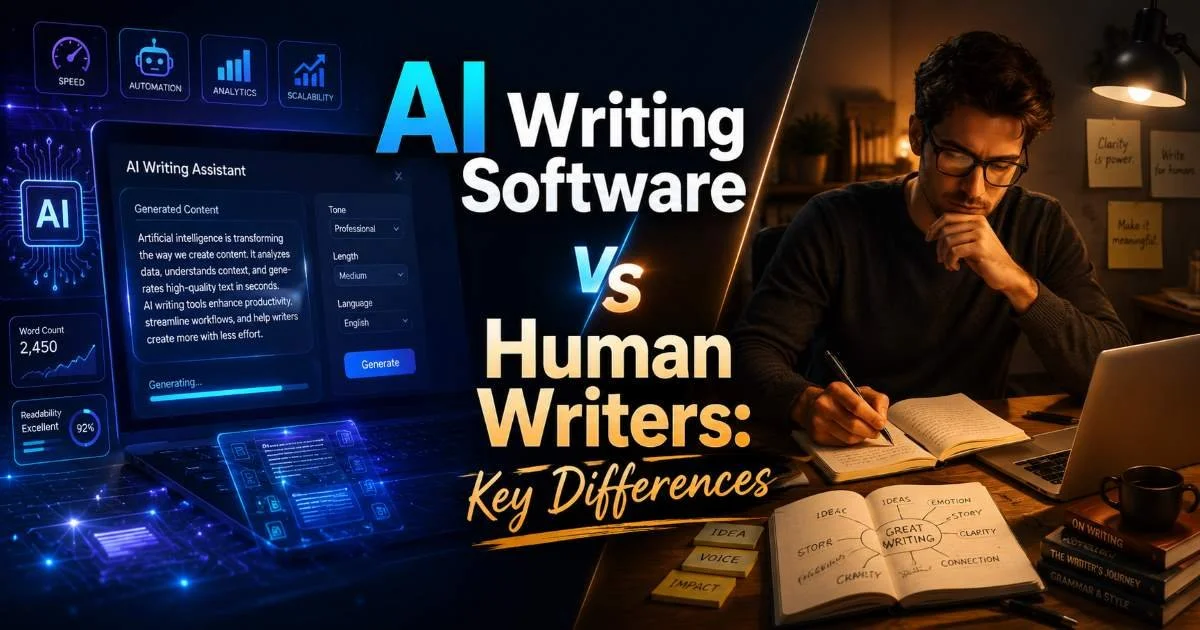
AI blog writing is the process of using artificial intelligence tools to generate complete, publish-ready blog posts from a topic, keyword, or brief prompt. For content marketers and bloggers drowning in editorial calendars, this approach represents a fundamental shift in how written content gets produced and published. Instead of staring at a blank document for hours, you feed an AI system your target keyword, specify your audience and tone, and receive a structured draft that covers the topic with genuine depth.
The technology has matured rapidly, moving from clunky paragraph spinners to sophisticated systems that understand SEO principles, content hierarchy, and reader intent. What once took a skilled writer four to six hours can now be drafted in minutes, freeing teams to focus on strategy, editing, and distribution. But AI blog writing isn't about replacing human creativity. It's about amplifying it.
Key Takeaways
- AI blog writing transforms a single keyword into a structured, SEO-optimized draft in minutes.
- Automated content creation still requires human editing for accuracy, voice, and brand alignment.
- The best AI writing tools handle structure, headings, and keyword placement automatically.
- Converting a keyword to a blog post eliminates the blank-page problem that kills productivity.
- SEO blog automation works best when paired with genuine expertise and editorial oversight.

How AI Blog Writing Works
From Keyword to Outline
The process of going from a keyword to blog post starts with input. You provide the AI system with your target keyword, desired length, audience profile, and sometimes a content brief. The tool then analyzes search intent by examining what currently ranks for that keyword, identifying subtopics that readers expect to see covered. This analysis mirrors what a skilled SEO strategist would do manually, but it happens in seconds rather than an hour of SERP research.
Read also: How to Scan Your Website for Technical SEO Problems
From that analysis, the system generates an outline with heading hierarchy, suggested sections, and a logical flow that matches how readers consume information. A blog post generator like Blog Generator handles this automatically, producing H2 and H3 structures that signal topical authority to search engines. The outline phase is arguably the most valuable step because strong structure determines whether a post actually gets read or bounced from within ten seconds.
Content Generation and Optimization
Once the outline exists, the AI model writes each section by drawing on patterns from its training data. Modern systems don't just string sentences together — they maintain coherence across paragraphs, vary sentence length for readability, and incorporate secondary keywords at natural insertion points. The output typically includes meta descriptions, internal linking suggestions, and even image alt text recommendations as part of the broader SEO blog automation workflow.
The generation step also handles on-page SEO mechanics that writers often forget. Keyword density, heading optimization, paragraph length, and transition phrasing all get baked into the draft automatically. This doesn't mean the output is perfect. It means you start with a B+ draft instead of a blank page, and your editing focuses on elevating quality rather than building from scratch.
Always review AI-generated outlines before generating the full post; fixing structure problems early saves significant editing time later.
Why It Matters for Content Marketers
Speed and Scale
Content marketing teams face a relentless demand for fresh, optimized material. HubSpot's research shows that companies publishing 16 or more blog posts per month get 3.5 times more traffic than those publishing four or fewer. That's a pace most small teams simply cannot sustain with traditional writing workflows. AI blog writing collapses the production timeline from days to hours, making consistent publishing achievable even for lean operations with limited budgets.
The economic math is straightforward. A freelance blog post of 1,500 words typically costs between $150 and $500, depending on the writer's expertise and the topic's complexity. Automated content creation tools can produce comparable drafts for a fraction of that cost per post. The savings compound dramatically when you're producing twenty, thirty, or fifty pieces of content per month across multiple client accounts or product lines.
SEO Consistency
Human writers are inconsistent with on-page SEO. Some remember to include the focus keyword in the first paragraph; others forget entirely. Some naturally write scannable content with clear subheadings; others produce dense walls of text. AI writing tools apply SEO best practices uniformly across every piece they generate. Every post gets proper heading structure, appropriate keyword placement, and optimized paragraph lengths without relying on a checklist or an editor's memory.
This consistency matters for long-term organic growth. Google rewards sites that demonstrate topical authority through comprehensive, well-structured content published regularly. When every post follows SEO fundamentals, your site builds authority faster than competitors whose content quality fluctuates wildly between writers and deadlines. The compound effect of consistent optimization across hundreds of posts creates a significant competitive advantage over twelve to eighteen months.
"AI blog writing doesn't replace strategy; it removes the bottleneck between having a strategy and executing it."
Common Misconceptions About AI Writing Tools
The biggest myth surrounding AI blog writing is that it produces content ready to publish without any human involvement. That's simply not true, and anyone selling you on a fully autonomous content pipeline is oversimplifying reality. AI-generated drafts require fact-checking because language models can hallucinate statistics, misattribute quotes, or present outdated information as current. A human editor remains essential for verifying claims, injecting original insights, and aligning the tone with your brand voice.
Never publish AI-generated content without fact-checking statistics, quotes, and technical claims. Language models can confidently present inaccurate information.
Another common misconception is that Google penalizes AI-generated content. Google has explicitly stated that its ranking systems reward high-quality content regardless of how it's produced. The search engine cares about helpfulness, accuracy, and user satisfaction, not whether a human or machine typed the words. What Google does penalize is low-quality, spammy content created purely to manipulate rankings, whether that content was written by a person or a bot. If you're reviewing comprehensive comparisons of tools for your workflow, resources like this roundup of AI blog writer tools can help you evaluate options based on output quality.
Google's helpful content guidelines apply equally to human-written and AI-generated content; quality and user value are what matter.
A third misconception is that all blog post generator tools produce identical results. The reality is that output quality varies enormously depending on the underlying model, the prompt engineering, and how the tool handles structure and SEO integration. Some tools produce generic, surface-level content that reads like a Wikipedia summary. Others generate nuanced, well-organized posts that genuinely help readers solve problems. The tool you choose matters as much as the process you build around it.
Finally, some marketers worry that AI content will make every blog sound the same. This concern has merit if you publish raw output without editing. But when treated as a first draft, a starting point that captures structure, coverage, and keyword placement, the final published piece reflects your unique editorial voice after human revision. The AI handles the scaffolding; you provide the personality, the proprietary data, and the opinions that differentiate your brand.
How AI Blog Writing Compares to Traditional Workflows
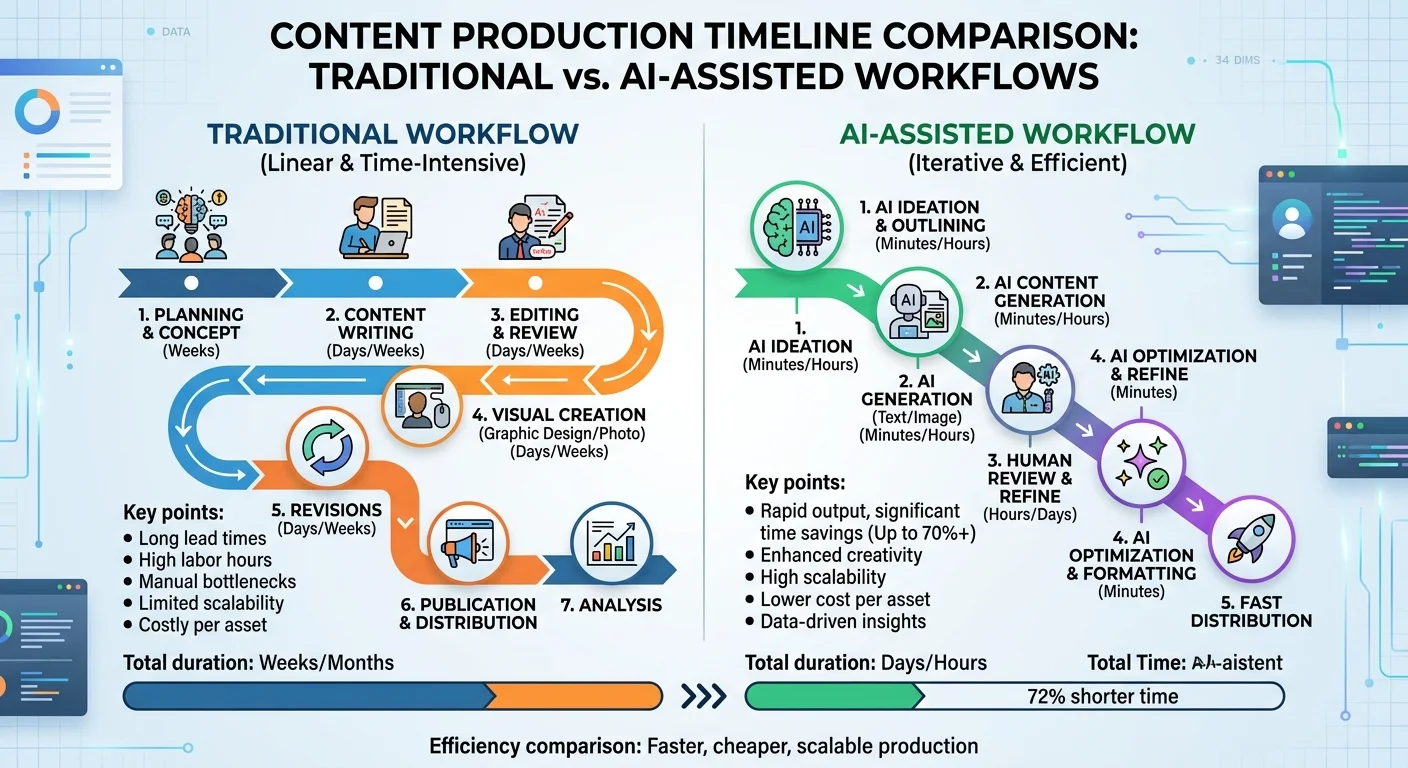
Understanding the practical differences between AI-assisted and traditional blog production helps you set realistic expectations. The table below breaks down key workflow dimensions across both approaches, highlighting where automated content creation adds the most value and where human writers still hold an edge.
| Workflow Dimension | Traditional Writing | AI-Assisted Writing |
|---|---|---|
| Time per 1,500-word post | 4–6 hours | 30–90 minutes (including editing) |
| SEO consistency | Varies by writer | Uniform across all posts |
| Original insight | High (if writer has expertise) | Requires human editing to add |
| Scalability | Limited by team size | Scales with minimal added cost |
| Fact accuracy | Writer-verified | Must be independently checked |
| Brand voice | Natural when writer is trained | Needs editing pass for alignment |
The comparison reveals a clear pattern: AI writing tools excel at speed, consistency, and scale, while human writers bring originality, domain expertise, and brand voice. The most effective content teams aren't choosing one over the other; they're building hybrid workflows where AI handles the heavy lifting of first-draft generation and SEO structure, while editors and subject-matter experts refine, verify, and elevate each piece before publication.
For teams already producing content at scale, the transition to an AI-assisted workflow often starts small. You might use a blog post generator for your lower-priority supporting content while keeping flagship pieces fully human-written. As you develop editing processes and quality standards around AI output, the balance naturally shifts. Many content teams report that within three months, they've doubled their publishing output without increasing headcount, a meaningful operational improvement by any measure.
Start by using AI for supporting content and comparison posts, then expand to pillar content as your editorial review process matures.
The keyword to blog post pipeline also changes how you plan content calendars. When production speed is no longer the bottleneck, you can pursue more ambitious keyword strategies targeting long-tail variations, building topic clusters faster, and responding to trending searches within days instead of weeks. This agility compounds over time as your content library grows and internal linking opportunities multiply across your published archive.
Frequently Asked Questions
?How do I give an AI tool the right input to get a usable draft?
?Is AI blog writing faster than hiring a freelance writer?
?Does AI-generated SEO content actually rank without heavy rewriting?
?What's the biggest misconception about SEO blog automation?
Final Thoughts
AI blog writing has moved past the novelty stage and into the operational toolkit of serious content marketers. The technology handles structure, SEO mechanics, and first-draft generation with remarkable competence, giving teams the bandwidth to publish more without sacrificing strategic focus.
But the human element, editorial judgment, fact verification, brand voice, and genuine expertise remain what separates forgettable content from material that actually earns trust and rankings. Treat these tools as powerful collaborators, not replacements, and you'll build a content engine that outpaces competitors still doing everything the slow way.
Disclaimer: Portions of this content may have been generated using AI tools to enhance clarity and brevity. While reviewed by a human, independent verification is encouraged.