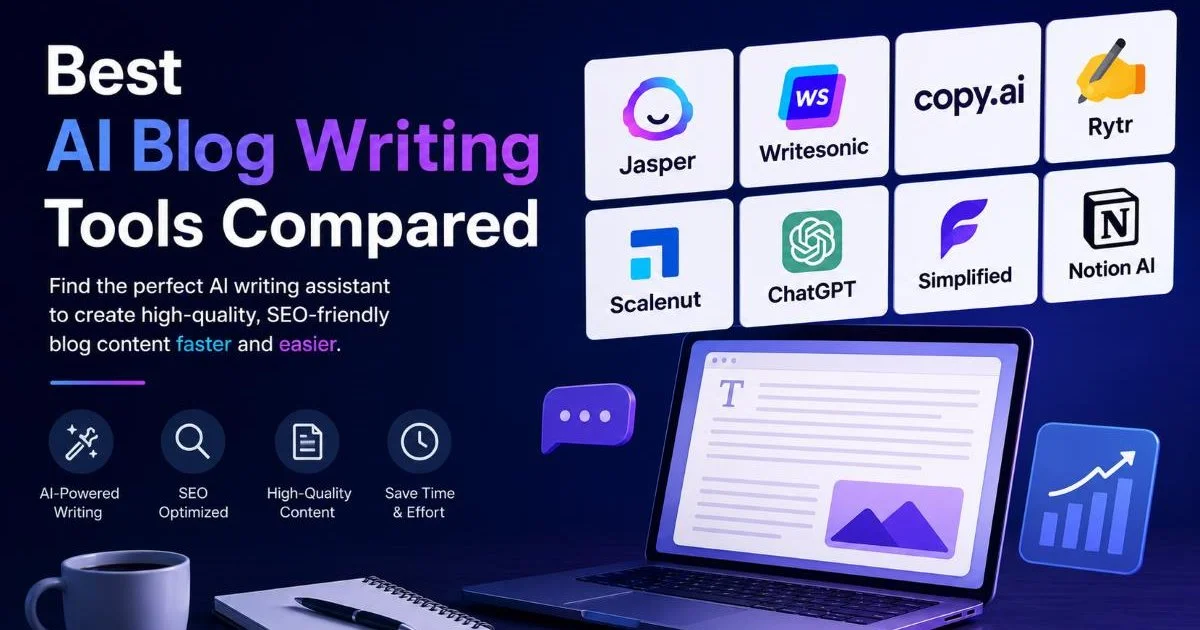
AI blog writing tools have transformed how content marketers and bloggers produce articles at scale. What once required hours of research, outlining, and drafting can now happen in a fraction of the time, thanks to AI content generator platforms that handle everything from topic ideation to full draft creation. But using these tools effectively requires more than just clicking "generate."
You need a structured workflow, a clear understanding of each tool's strengths, and a commitment to quality that keeps your SEO blog posts ranking well. This guide walks you through four practical steps to build a repeatable, scalable content operation using AI writing software.
Whether you're a solo blogger publishing three posts a week or a marketing team managing dozens of clients, these steps will help you produce better content faster without sacrificing the authenticity your audience expects. If you're new to the concept, our overview of what AI blog writing is and how it works provides a solid foundation before you start.
Key Takeaways
- Choose AI blog writing tools based on your specific content type, volume, and SEO needs.
- Always build detailed briefs before generating content to improve output quality significantly.
- Edit every AI draft for accuracy, tone, and originality before publishing anything.
- Integrate AI writing software into existing workflows rather than replacing your entire process.
- Track performance metrics monthly to refine your AI-assisted content strategy over time.

Step 1: Select the Right AI Blog Writing Tools
The market is flooded with AI writing platforms, and picking the wrong one can waste both time and budget. Not every tool handles long-form blog content well. Some excel at short social media copy but produce thin, repetitive articles. Others are built specifically for SEO blog posts, with built-in keyword optimization, SERP analysis, and content scoring features. Before committing to a subscription, test at least three platforms with the same prompt and compare the output quality side by side.
Consider your publishing volume. A solo blogger producing five posts monthly has different needs than an agency generating 100 articles per week. Tools like Jasper, Writesonic, and Blog Generator each target different segments of this spectrum. For a thorough breakdown of leading platforms, the comparison of best AI blog writing tools covers pricing, features, and ideal use cases in detail.
Matching Tools to Content Goals
Your content goals should drive your tool selection. If organic search traffic is your primary objective, prioritize AI content generator platforms with built-in SEO features like keyword density tracking, readability scoring, and competitor analysis. If you're focused on thought leadership, look for tools that allow extensive tone customization and accept detailed style guides as input. The best results come from matching tool capabilities to your actual workflow rather than chasing feature lists.
Budget matters, but don't default to the cheapest option. A tool that produces drafts requiring two hours of editing per post is more expensive than a pricier platform that delivers publish-ready content in 30 minutes. Factor in the total cost of production, including your editing time, fact-checking, and image creation, when evaluating ROI. Many teams also benefit from using custom GPTs to automate and scale specific parts of their content pipeline beyond just writing.
Sign up for free trials of your top three AI tools and run identical prompts through each. Compare output quality, not marketing claims.
Step 2: Build Structured Content Briefs
This is where most content teams fail with AI. They type a vague topic into a text box and expect polished articles in return. The quality of your AI-generated content is directly proportional to the quality of your input. A detailed content brief acts as the blueprint that guides the AI toward producing something genuinely useful. Without one, you'll get generic filler that reads like every other AI-generated post on the internet.
A good brief takes 15 to 20 minutes to prepare but saves you an hour or more in editing. Think of it as an investment with compounding returns. Once you've built a brief template that works for your niche, you can reuse the structure across dozens of articles, adjusting only the topic-specific details. This systematic approach is what separates teams that scale effectively from those that burn out trying to fix mediocre AI output.
What a Strong Brief Includes
Start with your target keyword and search intent. Is the reader looking for a definition, a comparison, a tutorial, or a product recommendation? Specify the article structure you want, including H2 headings, approximate word count per section, and any required elements like tables or examples. Include your target audience description, preferred tone, and two or three competitor articles you want to outperform. The more context you provide, the better your AI writing software will perform.
Don't forget to include what you don't want. Tell the AI to avoid certain phrases, skip generic introductions, or stay away from outdated statistics. Negative instructions are surprisingly powerful because they prevent the most common AI writing problems before they happen. Also include any proprietary data, case studies, or unique perspectives you want woven into the piece. This is what makes AI-assisted content stand out from pure AI-generated content.
AI tools perform best with briefs between 200 and 500 words. Shorter briefs produce generic content; longer ones can confuse the model.
"The quality of your AI-generated content is directly proportional to the quality of your input."
Step 3: Generate, Edit, and Optimize Drafts
With your tools selected and your brief ready, it's time to generate content. Run your brief through your chosen platform and evaluate the first draft critically. Don't accept the first output. Most AI blog writing tools allow you to regenerate sections, adjust tone, or expand specific paragraphs. Use these features aggressively. Generate two or three versions of each section and combine the strongest elements from each into a single draft.
Understanding how AI content generators improve SEO blog posts will help you focus your optimization efforts. Pay attention to keyword placement, internal linking opportunities, and content structure. AI tools are good at producing readable text, but they often miss strategic SEO elements like FAQ sections, featured snippet formatting, and proper heading hierarchy. These are optimizations you'll need to add manually or through a dedicated SEO tool.
The Editing Process That Matters
Editing AI content is fundamentally different from editing human-written content. With human writers, you're usually fixing grammar, tightening prose, and checking logic. With AI drafts, your primary concerns are accuracy, originality, and voice. AI models can confidently state things that are factually wrong, cite studies that don't exist, and invent statistics. Every claim in an AI-generated draft needs verification. This is non-negotiable if you care about your brand's credibility.
Never publish AI-generated statistics, quotes, or citations without independently verifying each one. AI models frequently fabricate specific numbers and source attributions.
Voice consistency is the other major editing challenge. The difference between AI writing software and human writers often shows up in subtle ways: overly uniform sentence length, hedging language, and a tendency toward safe, generic statements. Your editing pass should inject personality, add specific examples from your experience, and remove any phrasing that feels templated. For a deeper analysis of these differences, the comparison of AI writing software versus human writers covers key distinctions worth understanding.
Step 4: Scale Your Workflow and Measure Results
Scaling AI content production isn't about generating more articles faster. It's about building a repeatable system that maintains quality as volume increases. Start by documenting your workflow from brief creation through publishing.
Assign clear roles if you're working with a team: who writes the brief, who reviews the AI draft, who handles SEO optimization, and who gives final approval. Without defined ownership, quality drops quickly as volume rises.
Batch processing is your friend. Instead of creating one article from start to finish, group similar tasks together. Write all your briefs on Monday, generate all drafts on Tuesday, edit on Wednesday, and optimize on Thursday.
This approach reduces context-switching overhead and allows you to spot patterns across articles, such as recurring AI quirks or gaps in your brief template, that you'd miss when working on individual pieces.
Tracking What Works
Set up a content performance dashboard that tracks organic traffic, keyword rankings, time on page, and conversion metrics for every AI-assisted article you publish. After 90 days, compare these metrics against your pre-AI content baseline.
You'll likely find that some content categories work better with AI assistance than others. Informational, how-to, and comparison posts tend to perform well. Opinion pieces, case studies, and deeply technical content usually need more human involvement.
Review your metrics monthly and adjust your approach accordingly. If your AI-generated posts consistently underperform on time-on-page compared to human-written content, that signals a voice or depth problem worth addressing in your briefs.
If they outperform on volume but lag on conversions, you may need to add stronger CTAs or more specific examples during the editing phase. The data should drive continuous improvement in your process, not just validate your initial approach.
Create a simple spreadsheet tracking each article's production time, AI tool used, editing time, and 90-day traffic results to identify your most efficient content patterns.
Don't overlook content freshness. AI-generated articles can become outdated just as fast as any other content. Build quarterly review cycles into your workflow to update statistics, refresh examples, and revise recommendations. This maintenance work is just as important as initial production for maintaining your search rankings over time.

Final Thoughts
Building a scalable content operation with AI blog writing tools comes down to process discipline, not tool sophistication. Choose the right platform for your goals, invest time in creating strong briefs, edit ruthlessly for accuracy and voice, and measure everything.
The teams seeing the best results treat AI as a powerful collaborator within a structured workflow, not a magic button that replaces human judgment. Start with these four steps, refine based on your data, and you'll produce more high-quality content than you ever thought possible.
Disclaimer: Portions of this content may have been generated using AI tools to enhance clarity and brevity. While reviewed by a human, independent verification is encouraged.